
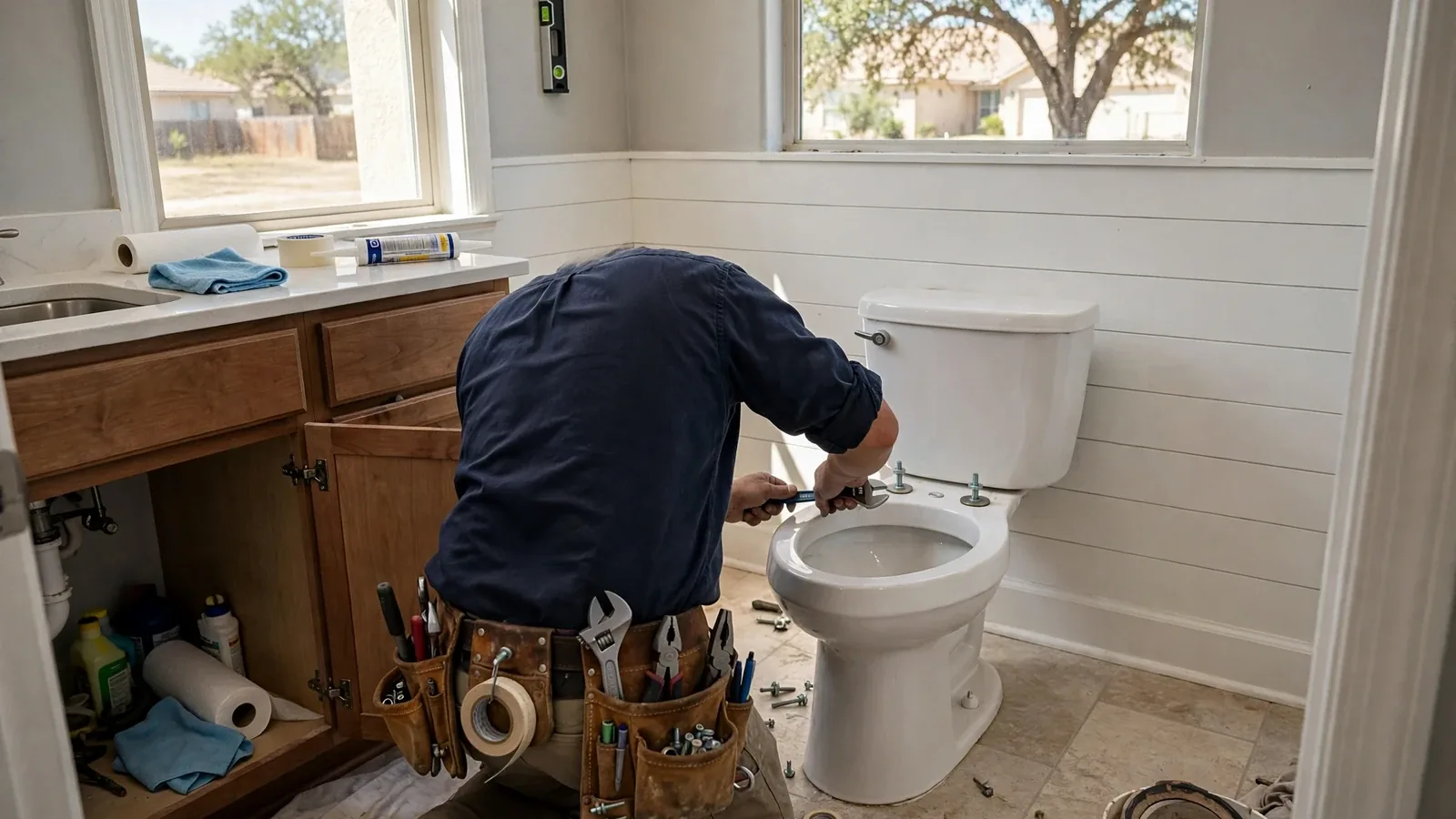
Emergency toilet overflow or a leak onto the floor
Overflow and base leaks need fast action because the water soaks subfloor, and a bathroom on a second floor can drip into the ceiling below. A toilet that is only running or hissing can wait for a same-day appointment when available. A toilet pouring water onto the floor cannot.
While you wait for us.
Turn the supply valve behind the toilet clockwise until it stops. Lift the tank lid and push the flapper down, or lift the float, to stop more water entering the tank. Do not flush again.
Soak up standing water with towels so it does not reach the walls or vent, and keep the door closed to the rest of the house. If the valve will not turn, close the home's main valve and call.
An overflow from a clog is often a drain issue, not a toilet part. If other fixtures gurgle or back up too, the problem is deeper in the line, and our drain cleaning work takes it from there.
The toilet that runs all night
A running toilet is the most common call we hear, and the water loss adds up quietly. The EPA says household leaks waste more than 9,300 gallons a year on average. A toilet is a frequent culprit because the leak is silent.
Do the EPA dye test before you buy parts. Drop a few drops of food coloring into the tank and wait 10 minutes without flushing. If color appears in the bowl, the flapper or seat is leaking, and the fix is usually small.
| Symptom. | Likely part. | Typical fix. |
|---|---|---|
| Tank refills every few minutes. | Worn flapper or flush valve seat. | Replace the flapper, clean or replace the seat. |
| Hissing that never stops. | Fill valve not shutting off. | Replace the fill valve. |
| Water trickles into the overflow tube. | Float set too high. | Lower the float and test. |
| Handle sticks or hangs. | Lever or chain. | Replace the lever, reset the chain. |
| Weak flush. | Partial clog, low tank level or clogged rim jets. | Clear the line or clean the jets. |
Leaks at the base: wax ring, flange and closet bolts
Water around the base after a flush often means a failed wax ring. The ring seals the toilet outlet to the closet flange on the drain pipe, and it fails when a toilet rocks, when the flange sits too low, or when the bolts loosen. A wobbly toilet is the early warning.
We pull the toilet and check the flange for cracks and height before setting a new ring. A cracked or low flange needs a repair ring or a new flange, not just a new wax ring. Skipping that check is why a base leak comes back in a month.
- Toilet rocks side to side when you push on it.
- Damp floor or soft flooring around the base.
- Sewer odor in the bathroom after a flush.
- Caulk line stained or lifting at the floor.
Repair a toilet or replace it
Parts cost far less than a new toilet, so repair is the right start for a flapper, fill valve or supply line. Replacement makes sense when the porcelain is cracked, the tank leaks from a crack, or the toilet clogs again and again for no reason we can find. A cracked bowl or tank cannot be sealed for good.
Do not keep using a toilet with a hairline crack in the bowl. Water can seep out slowly and rot the floor under it.
Installing a new toilet in Eagle, ID
A toilet install starts with the rough-in, the distance from the wall to the center of the drain. Twelve inches is the common standard, and a mismatch means the new toilet will not fit. We measure first, set a new wax ring or seal on a sound flange, tighten the bolts evenly, and test for leaks and a full flush before we leave.
If the job grows past a swap, DOPL, not the city, is who issues the permit. Homeowners may buy one for work on their own residence, and rules differ by job.
Bathrooms in Two Rivers and The Preserve: count the valves
Larger homes in Two Rivers, built roughly 2000 to 2017, and The Preserve, built about 2013 to 2018, can have several bathrooms. More toilets means more fill valves, flappers and supply lines to wear out at different times. We suggest you find each toilet's shutoff before you need it.
The EPA says a family of four using more than 12,000 gallons a month in winter may have serious leaks. In a house with several toilets, run the dye test in each one. We also serve neighbors across Ada County, including Garden City, where older bathrooms may have older parts.
Small toilet fixes people ask about
- Wax ring replacement after a wobble or leak.
- Fill valve swap for hissing or slow refill.
- Supply valve replacement when the stop is stiff or drips.
- Flush lever or handle that sticks.
- Bidet seat hookup to the toilet supply.
Most toilet parts are easy to swap if you can turn off the water and keep the tank dry. Where the valve under the tank will not close or the supply line is corroded, stop and call, because forcing it can crack the valve. That same stiff shutoff is a good reason to read faucet repair for how we handle failing valves.
What decides the cost of toilet repair
What shapes the price.
- Which part failed. A flapper and a fill valve are quick swaps. A wax ring and flange repair means pulling the toilet.
- Toilet style and parts availability. One-piece, wall-hung and older models can need brand-specific parts.
- Condition of the flange and floor. A cracked flange or soft subfloor adds work beyond the toilet itself.
- Repair or full replacement. A cracked porcelain fixture or a chronic clog may make a new toilet the better choice.
- Shutoff and supply condition. A seized stop valve or corroded line adds parts and time.
An overflow that ruins a floor may be covered when it is sudden, while a base leak that went on for months is usually called gradual wear. Read your policy and ask your insurer. We cannot promise coverage.
A worn flapper and a rotted flange are very different jobs. Ring (208) 679-8357 and, once we see the toilet, a clear price before work starts is yours.
Common questions
Do you handle toilet repair emergencies at night or on weekends in Eagle?
Yes. A toilet that overflows or runs all night is a call for (208) 679-8357, which is staffed 24/7 through nights and weekends. We offer same-day appointments when available and promise no arrival time. Turn the valve behind the bowl clockwise to stop the water, then call.
Why does my toilet keep running?
Usually a worn flapper, a fill valve that will not shut off, or a float set too high. The EPA dye test, a few drops of food coloring in the tank for 10 minutes, tells you whether it leaks into the bowl.
Why is water leaking around the base of my toilet?
The wax ring has most likely failed, or the flange is cracked or low. Stop using the toilet, shut the supply valve, and call before the floor is damaged.
Can you install a bidet seat or replace a supply valve?
Yes. Both are small jobs when the shutoff works. If the supply valve will not close, we replace it first.
Can I flush wipes in Eagle, ID?
Wipes that say flushable can still snag in the line, so put them in the trash. Check with the Eagle Sewer District, which provides sewer service in Eagle, ID, for what it asks homes to keep out.
Does a toilet replacement need a permit in Idaho?
The state issues plumbing permits through DOPL. Homeowners may buy one for their own residence, and since rules vary by job, call DOPL at 208-334-3233 with the details.
If the toilet is running all night or leaking on the floor, call (208) 679-8357.
Call (208) 679-8357Standards and sources
Plumbing work in Idaho follows the state plumbing code, which is based on the 2015 Uniform Plumbing Code (UPC) with state amendments in IDAPA 24.39.20. Permits and licenses come from the Idaho Division of Occupational and Professional Licenses (DOPL), not the city.
- U.S. EPA: Fix a Leak Week (federal agency)
- Idaho DOPL plumbing FAQs (state agency)