
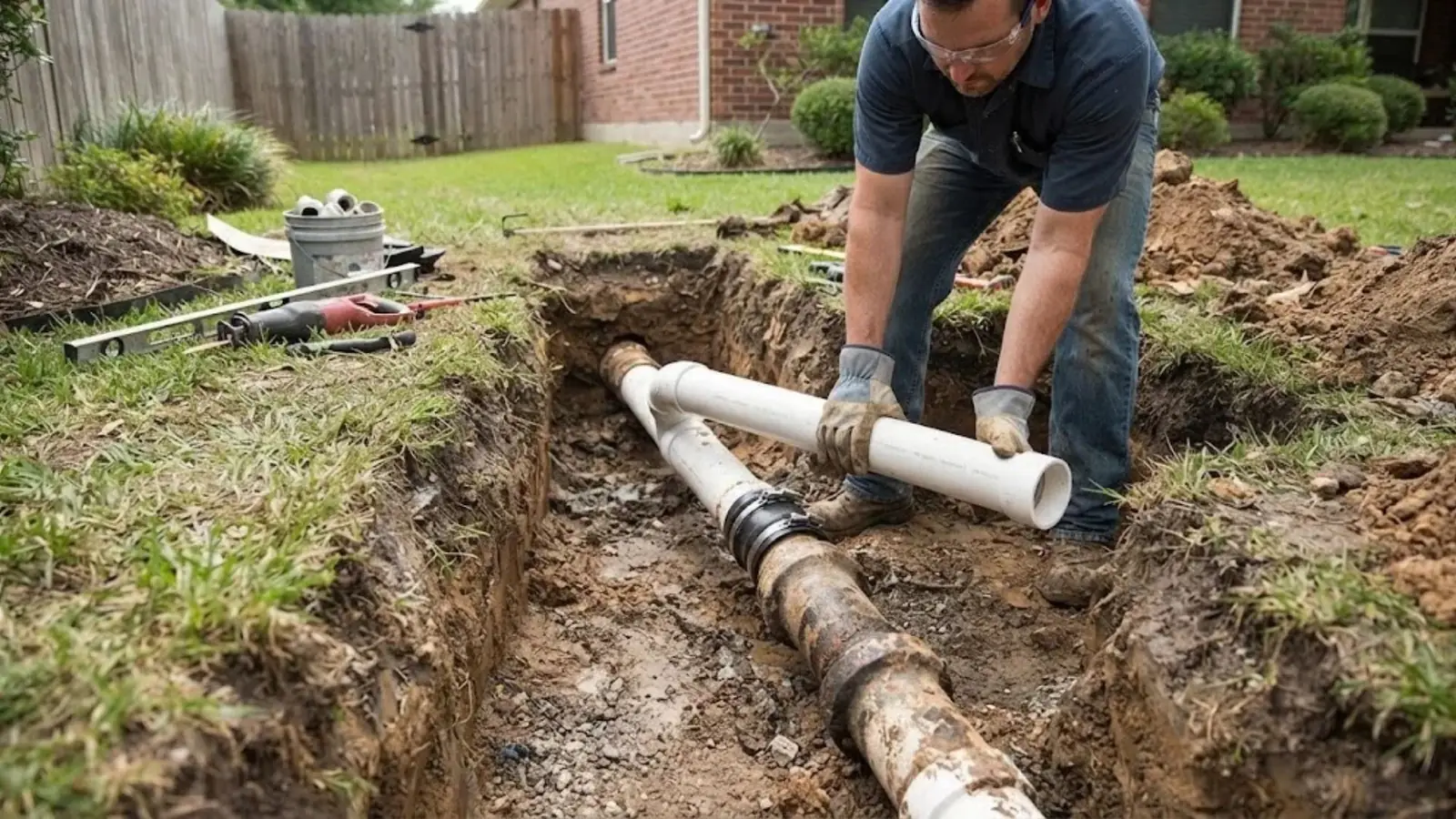
When a sewer backup is an emergency
Sewage in a shower, a floor drain or the lowest toilet means the main line is blocked or broken downstream of that fixture. Every flush or load of laundry sends more water into a line that cannot take it. Treat it as urgent, even at night, and call the dispatch line.
We take after-hours and weekend calls and book same-day appointments when available. We do not promise an arrival time. What we can do on the phone is help you stop the flow and protect the floors until a plumber arrives.
While you wait for us.
Stop all water use in the house. Do not flush, and do not pour chemical cleaner into the backed-up drain. Keep children and pets out of any room with sewage, and wear gloves and boots if you must step in it. Move rugs and boxes off the floor, and take photos of the damage for your insurance claim.
Finding the break before anyone digs
A blockage and a broken pipe look the same at the fixture, so we sort them out with a camera, the same tool used in a planned sewer inspection. A small, waterproof camera head on a push cable goes down the cleanout and shows the pipe from the inside. We watch for roots, cracks, offset joints, sags where water pools and sections that have collapsed.
A locator tuned to the camera's transmitter then marks the spot on the ground and reads its depth. That tells us where to dig, or whether we can avoid digging at all. We always call 811 before opening the ground in Eagle, ID, and we cannot dig near utilities until they are marked.
Sometimes the camera cannot pass. A full blockage, a badly collapsed section or a pipe full of mud stops it. In that case we clear what we can, and if the pipe will not open, we dig to the spot and repair what we find.
Spot repair, lining or replacement: how we decide
The right fix depends on what the camera shows and how much pipe is damaged. A single crack is a different job than a pipe that has failed for twenty feet. The table lays out the options in plain terms.
| Option. | How it works. | Best for. | Limit. |
|---|---|---|---|
| Spot repair. | Dig to the damage and replace a short section. | One crack, one broken joint, a root at a known spot. | Needs a trench at that spot. |
| Cured-in-place lining. | A resin-soaked liner is inflated inside the old pipe and hardens. | Cracks and roots in a pipe that is still intact. | Not for collapsed or badly offset pipe. |
| Pipe bursting. | A new pipe pulls through while breaking the old one. | Long runs of failed pipe with room at both ends. | Needs pits at both ends. |
| Full replacement. | Trench out the old pipe and lay new. | Collapsed pipe, bellies, or mixed old materials. | Most disruptive to the yard and drive. |
Lining and bursting are often called trenchless, because they need only small access pits. Whether they fit depends on pipe size, depth, bends and what is under the pipe. We will say when a trench is the honest answer.
Roots and cracks: the common local failures
Roots do not break a healthy pipe. They find a small gap at a joint, push in for the moisture and then thicken until they block the flow. Once roots are in, the pipe usually has a defect that needs repair.
Cleaning with a root-cutting head or a hydro jetter buys time, but the roots grow back if the gap stays. When the camera shows roots at the same joint twice, we steer you toward a repair. Our hydro jetting page covers the cleaning side.
- Gurgling in a tub when the toilet flushes.
- Slow drains in more than one fixture.
- Sewage smell in the yard or basement.
- A wet, sunken spot over the pipe path.
Eagle Sewer District, your lateral, and older pipe near Downtown Eagle
The Eagle Sewer District provides sewer service in Eagle, ID, and Eagle has no wastewater treatment plant of its own. The district runs the public main. The pipe from your house out to that main is the lateral, and we repair the part on your side. Ask the district where its responsibility ends, and check which district serves your address.
Homes near Downtown Eagle and Heritage Park of any older era may have clay or cast iron lateral pipe. Those materials crack and shift with age in ways modern plastic does not. We do not know what is under your yard until the camera runs, so we do not guess by neighborhood.
Septic or sewer? Check before you call
Not every home in Ada County is on a sewer district. Some outlying lots have a septic tank and drain field instead. If you are west of us, check the same thing for your address, and see our Star service area. Check whether your property is served by the Eagle Sewer District or runs on septic, because the repair plan differs.
If you are on septic, call a septic pumper for tank work. We can look at the line between house and tank with a camera, but the tank itself is a different trade.
What drives the price of a sewer line repair
What shapes the price.
- Depth and length of the damage. A short, shallow repair is a smaller dig than a deep or long one. Length decides whether a spot repair, a liner or a replacement makes sense.
- Repair method. Lining, bursting and open trench each use different materials, equipment and time. The camera findings decide which one applies.
- Surface restoration. Concrete, pavers, landscaping and driveways cost more to open and replace than bare soil. Where the pipe runs under them matters.
- Access and cleanouts. A pipe with a good cleanout is easier to camera and line. Adding a cleanout is often a good idea during repair.
- Permit and inspection. The state Division of Occupational and Professional Licenses issues the permit. A homeowner may buy one for their own residence, but the rules vary with the job, so ask DOPL.
A root-damaged or aging lateral is commonly counted as wear, which most homeowners policies exclude. Some offer a separate sewer backup endorsement, so check yours before assuming the dig is covered.
What the camera finds in the pipe decides the repair, and the repair decides the figure. Telephone (208) 679-8357 for a clear price before work starts.
Common questions
Do you handle sewer line repair emergencies at night or on weekends in Eagle?
Yes. Sewage in the house is not something to sit on until morning, and dispatch at (208) 679-8357 is open 24/7. We offer same-day appointments when available and do not promise an arrival time. Describe what is backing up and which drains are affected.
Can a sewer line be fixed without digging up my yard?
Sometimes. Cured-in-place lining and pipe bursting need only small access pits, but they fit only some pipes. A collapsed or badly offset pipe usually needs a trench.
How do I tell a main line problem from a single clogged drain?
A single fixture that is slow points to that fixture's drain. If the lowest tub or floor drain backs up, or several fixtures gurgle at once, the main line is the likely cause.
Can epoxy lining be done under a slab?
Often yes, if the pipe is intact and a cleanout gives access. Lining avoids breaking the slab, but the camera has to show a pipe that can still hold a liner.
Can a cast iron sewer pipe be repaired?
Yes, with spot replacement, lining or full replacement, depending on how far the corrosion has gone. The camera shows how much of the pipe wall remains.
Who handles a blocked sewer main in Eagle, ID, my plumber or the district?
The Eagle Sewer District runs the public main. The pipe on your lot is generally yours, and the district can tell you where its responsibility ends. If our camera shows the problem in the street main, we tell you so you can call the district.
If the camera is what you need first, call our licensed plumbers and tell the dispatcher which drains are backing up.
Call (208) 679-8357Standards and sources
Plumbing work in Idaho follows the state plumbing code, which is based on the 2015 Uniform Plumbing Code (UPC) with state amendments in IDAPA 24.39.20. Permits and licenses come from the Idaho Division of Occupational and Professional Licenses (DOPL), not the city.
- Idaho DOPL plumbing FAQs (state agency)