
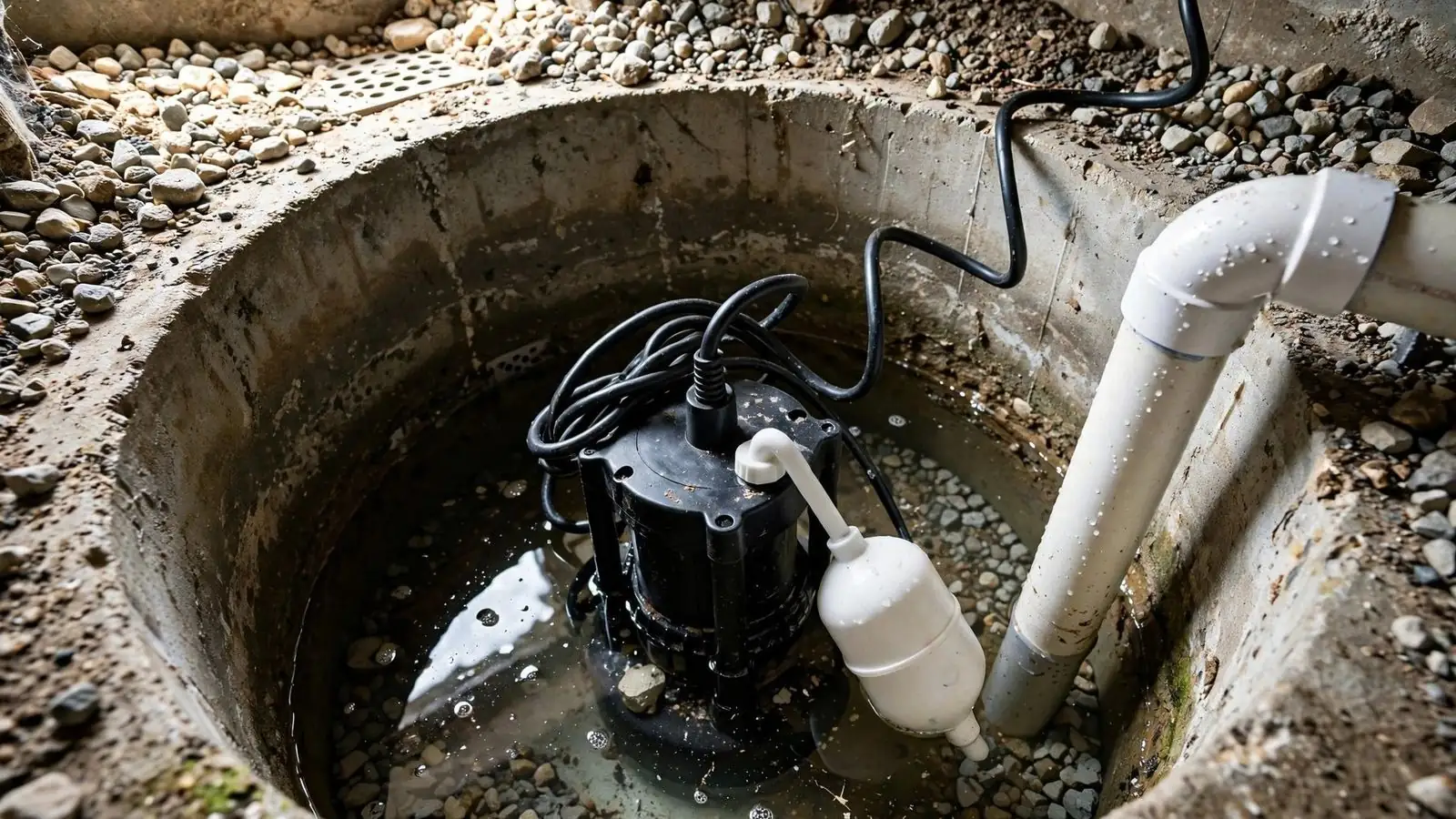
When a sump pump failure is an emergency
A failed pump matters when water is rising in the pit, in the crawlspace or at the lowest floor. A pump that simply runs a lot after rain is working. A pump that hums with no water leaving, or a pit that fills and sits still, is not.
While you wait for us.
Look at the breaker first. Reset a tripped one once, and if it trips again leave it off. Never stand in water to touch the pump or its cord.
If you can reach it safely, lift out the float and check that it moves freely. Bail water with a bucket if the pit is near the top, and move boxes and electronics off the floor.
Night calls and weekend calls land on one line, and a same-day appointment is booked when one is open. We do not promise an arrival time, so tell the dispatcher how high the water is and whether the power is on.
Sump pump or sewage ejector: which one do you have?
A sump pump moves groundwater or rain that collects in a pit and sends it outside. A sewage ejector pump lifts wastewater from a below-grade bathroom or laundry up to the main drain. They look alike, but they carry different loads.
| Pump. | What it moves. | Where it sits. | Warning sign. |
|---|---|---|---|
| Sump pump. | Groundwater and rain. | Pit in the floor or crawlspace. | Pit fills, pump runs nonstop. |
| Sewage ejector. | Toilet and drain waste. | Sealed basin, tight lid. | Gurgling, sewer smell, slow flush. |
| Backup pump. | Same as the main pump. | Beside the primary pump. | Alarm sounds or battery is low. |
Because an ejector pushes sewage into your home's sewer line, check which district serves your address, since the Eagle Sewer District provides sewer service in Eagle. We also treat an ejector failure more carefully. The lid stays sealed, and you should keep people and pets away from any overflow.
Why sump pumps stop working
Most failures trace to one of a handful of parts. We work through them in order, starting with the easiest to check.
- No power: a tripped breaker, a dead outlet or an unplugged cord.
- Stuck float switch: it jams against the pit wall or a pipe and never signals the pump to start.
- Failed check valve: water falls back into the pit and the pump cycles constantly.
- Clogged intake: gravel, silt or debris blocks the screen.
- Worn motor: the pump hums, gets hot, or runs with no flow.
If the pump is old or the motor is burned out, replacement is usually the better call than a repair. A pump with a bad switch and a bad bearing is a pump near the end of its life.
Boise River history and Eagle Island State Park lowlands
Recurring Boise River flooding has been part of Eagle's history, even with Arrowrock Dam (1915) and the dams that followed. Eagle sits in Ada County, and low ground around Eagle Island State Park is the kind of place where water has a long history of collecting.
Not every home in Eagle, ID has a sump pump, and many do not need one. If your house sits on a slab with no pit, a wet floor is more likely a plumbing leak, so our leak detection page is the better place to start.
Pressurized irrigation as a seasonal water source
The Shores and Banbury Meadows have pressurized irrigation, a second pipe network that feeds sprinklers. If an irrigation line leaks near a foundation, that water can show up in a pit or crawlspace and look like a groundwater problem.
Not every wet pit is a pump failure, and not every wet basement is plumbing at all. Surface grading, gutters and window wells can also push water against a foundation. If the pit is dry and the floor is wet, call before you buy a new pump. The same questions apply to a pit in a Star home.
Testing and keeping a pump ready
Pour water in.
Add a bucket of water to the pit slowly and watch the float rise.
Listen for the start.
The pump should start before the water reaches the top and drain the pit.
Check discharge.
Walk the outside end of the discharge pipe to make sure water leaves and drains away from the house.
Check the check valve.
After the pump stops, water should not fall back into the pit.
Run the test before the wet season and after any big storm. A battery backup is worth asking about if the power tends to drop in storms. See our guide to water line repair if the wet area is in the yard instead of the pit.
What drives the cost of sump pump repair
What shapes the price.
- Repair or replacement. A float switch or check valve is a small repair. A burned motor usually means a new pump.
- Pump type and size. Sump pumps, sewage ejectors and battery backups use different equipment and horsepower.
- Pit and discharge condition. Silt in the pit or a frozen or damaged discharge line adds work.
- Access. A pit in a tight crawlspace takes longer than one in an open utility room.
- Time of the call. After-hours and weekend calls are priced with the schedule in mind.
Many homeowners policies exclude water that backs up through a sump or drain unless you added that coverage, and they often exclude wear and the pump itself. Ask your agent specifically about sump backup before the wet season.
Pump type and pit condition shape the price. Call (208) 679-8357, and our clear price before work starts covers both.
Common questions
Do you handle sump pump repair emergencies at night or on weekends in Eagle?
Yes. A pit that is filling while the pump sits silent is a call for (208) 679-8357 at any hour, since dispatch is 24/7. Same-day appointments are offered when available, and no arrival time is promised. Give the dispatcher the water level in the pit and whether the pump has power.
Why is my sump pump running all the time?
A stuck float or a failed check valve are common causes, and so is heavy rain or a high water table. We check the float and valve first, then the pit inflow.
Does every home in Eagle, ID need a sump pump?
No. Many homes have no pit at all. If you have one, test it. If you do not, a wet floor is often a plumbing leak or a drainage problem.
Can you replace a sewage ejector pump?
Yes. We pull the old unit, check the basin and check valve, and set the new pump with a sealed lid.
I have water in my basement after a storm. Is that a plumbing problem?
Not always. Grading, gutters, window wells and the foundation can all be the cause, and some of that falls outside plumbing. We will say so after we check the pit and the lines.
Does Boise River flooding mean I need a sump pump in Eagle, ID?
Flooding has been part of Eagle's history, but whether your house needs a pump depends on the lot and the foundation, and we cannot say from the history alone. Test the pump before the wet season and after any big storm.
If your pit is filling and the pump is silent, call (208) 679-8357 and our 24/7 dispatch will help.
Call (208) 679-8357Standards and sources
Plumbing work in Idaho follows the state plumbing code, which is based on the 2015 Uniform Plumbing Code (UPC) with state amendments in IDAPA 24.39.20. Permits and licenses come from the Idaho Division of Occupational and Professional Licenses (DOPL), not the city.
- Idaho DOPL plumbing FAQs (state agency)