
Read the bill for gallons, not just the total
Look at the usage line, not the amount owed. Compare the gallons used this month with the same month last year. A jump in gallons means water went through the meter, which rules out a rate change or a billing fee as the whole story.
For scale, the EPA says a family of four using more than 12,000 gallons a month in winter may have serious leaks. Summer use runs higher because of watering, so compare like seasons.
The two-hour meter test
Turn everything off.
Shut off taps, the dishwasher, the washing machine and the ice maker. Make sure no one flushes a toilet.
Read the meter.
Find the meter box, usually near the street or curb. Lift the lid and write down the numbers, or take a photo.
Wait two hours.
Use no water at all while you wait.
Read it again.
If the numbers moved, you probably have a leak, according to the EPA. Some meters also have a small dial or triangle that spins when water is flowing.
If the meter did not move, the leak may be in an irrigation zone that is on a timer, or the high use may be real. If it moved, go on to the next tests.
The toilet dye test
Toilets are the most common hidden leak, because the flapper can leak into the bowl without making a sound. Put a few drops of food coloring in the tank, and do not flush. Wait 10 minutes.
If color shows up in the bowl, the flapper or fill valve is leaking. Flush afterward so the dye does not stain. A toilet that runs all night can use a surprising amount of water, and the fix is usually a small part.
- Do the dye test on every toilet in the house.
- Look for a faint trickle sound at the tank.
- Check for drips at faucets and under sinks.
- Check hose bibs and the water heater drain for slow drips.
Numbers that help you judge how big the leak is
The EPA says the average household wastes more than 9,300 gallons of water a year from leaks. About 9 percent of homes leak 50 gallons or more per day, and fixing easy leaks can cut a bill by about 10 percent.
A faucet that drips once per second wastes more than 3,000 gallons a year. A small drip is still worth fixing, though a big jump in the bill usually means something larger.
Irrigation or indoors? Splitting the bill
Sprinklers can use more water than the rest of the house combined in summer. A stuck valve, a broken head or a cracked line can run for days before anyone notices, especially if the zone is out of sight.
Neighborhoods like The Shores and Banbury Meadows have pressurized irrigation, which is a second pipe network for sprinklers. Two Rivers homes sit between the channels of the Boise River and also run pressurized irrigation. Ask whether your sprinklers run on that system or on your house water, because only house water shows up on the household meter you are testing.
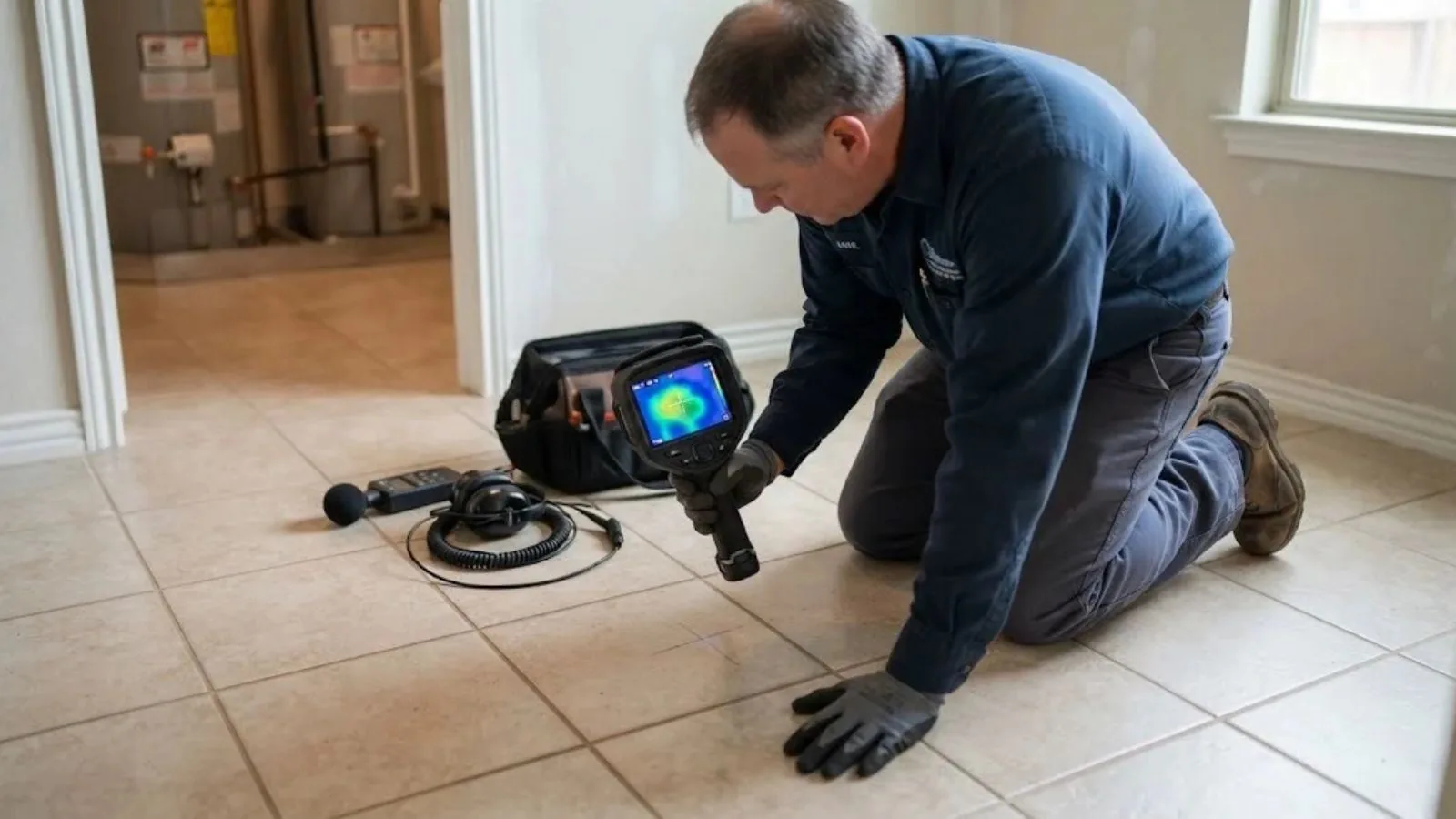
If your home has a separate irrigation line or meter, read it apart from the indoor meter. If you only have one, shut off the irrigation controller and the supply to it, then repeat the meter test. A leak detection visit can use listening gear and pressure tests to separate the two.
What the meter and test results mean
Use this table after you finish the tests. It matches what you saw to the likely source.
| What you saw. | Likely source. | Next step. |
|---|---|---|
| Meter moves, dye shows in bowl. | Toilet flapper or fill valve. | Replace the part, retest the meter. |
| Meter moves, no dye, irrigation off. | Hidden pipe leak indoors or in the yard. | Call for leak detection. |
| Meter moves only with irrigation on. | Sprinkler valve, head or buried line. | Check zones one at a time. |
| Meter still, bill is high. | Real use, a timer zone, or a billing issue. | Compare gallons month to month, ask the supplier. |
| Wet patch or low pressure outside. | Leak between meter and house. | Shut off water and call. |
When the leak is between the meter and the house
A wet yard patch, a green strip of grass in dry weather, or sudden low pressure can mean the pipe from the meter to the house is leaking. Who owns which stretch depends on where the utility's responsibility ends, so ask your utility.
Do not dig on a guess. Call 811 first, then have the leak located so the dig is short. When it is time to repair the pipe, our water line repair page lays out how that work goes.
Billing and leaks in Star and Garden City
Star Sewer & Water District runs its own municipal water system in Star. If you live there, the district is the place to ask about your meter and bill. Our page for a plumber in Star covers how we help from the plumbing side.
In Garden City, the City of Garden City provides water, sewer, trash and recycling. A bill there can show all four services, so check which line jumped. See our plumber in Garden City page for the area.
Who bills you for water in Eagle, ID
In Eagle, ID the water bill depends on your address. Your home may be served by Veolia Water Idaho, which draws groundwater from wells and disinfects it with sodium hypochlorite, and the Idaho PUC annual report lists 4 Eagle wells in service in 2024. A small area was transferred to the City of Eagle in a 2023 PUC case, and some outlying homes in Ada County use private wells, which have no water bill at all.
Sewer is separate. The Eagle Sewer District provides sewer service, so check which district serves your address. Your first call about a surprising bill goes to the supplier on your statement, and it can confirm meter reads, usage history, and any leak adjustment policy.
We do not know any supplier's adjustment rules, so ask them. The EPA tests in this guide give you the facts to bring to that call.
Common questions
How do I know if I have a hidden water leak?
Use the EPA meter test. Read the meter, use no water for two hours, and read it again. If the numbers moved, you probably have a leak.
Why is my water bill high when nothing looks wet?
A running toilet, a leaking irrigation zone, or a slab or yard line can all leak out of sight. Check the meter and do the dye test before you assume the bill is wrong.
How much water is too much in winter?
The EPA says a family of four using more than 12,000 gallons a month in winter may have serious leaks. Your household may differ, so compare with your own past bills.
Can a running toilet really raise a bill that much?
Yes, because it can run all day and night with no sound. The dye test takes 10 minutes and catches most of them.
Who do I call about a high water bill in Eagle, ID, my plumber or Veolia?
Both, in order. Call the supplier on your bill, which may be Veolia Water Idaho, the City of Eagle, or a district, to check the meter and usage. If the meter shows a leak, call us at (208) 679-8357.
Do landlords or property managers deal with this?
Yes. Property managers call us when a tenant's bill spikes, and the meter test tells them whether the leak is inside a unit or in the shared line.
If the meter test says water is leaking, call (208) 679-8357 and tell us what you found.
Call (208) 679-8357Standards and sources
Plumbing work in Idaho follows the state plumbing code, which is based on the 2015 Uniform Plumbing Code (UPC) with state amendments in IDAPA 24.39.20. Permits and licenses come from the Idaho Division of Occupational and Professional Licenses (DOPL), not the city.
- U.S. EPA: Fix a Leak Week (federal agency)